Skin health guide · RDG Clinic
Urticaria diagnosis and treatment in Riga
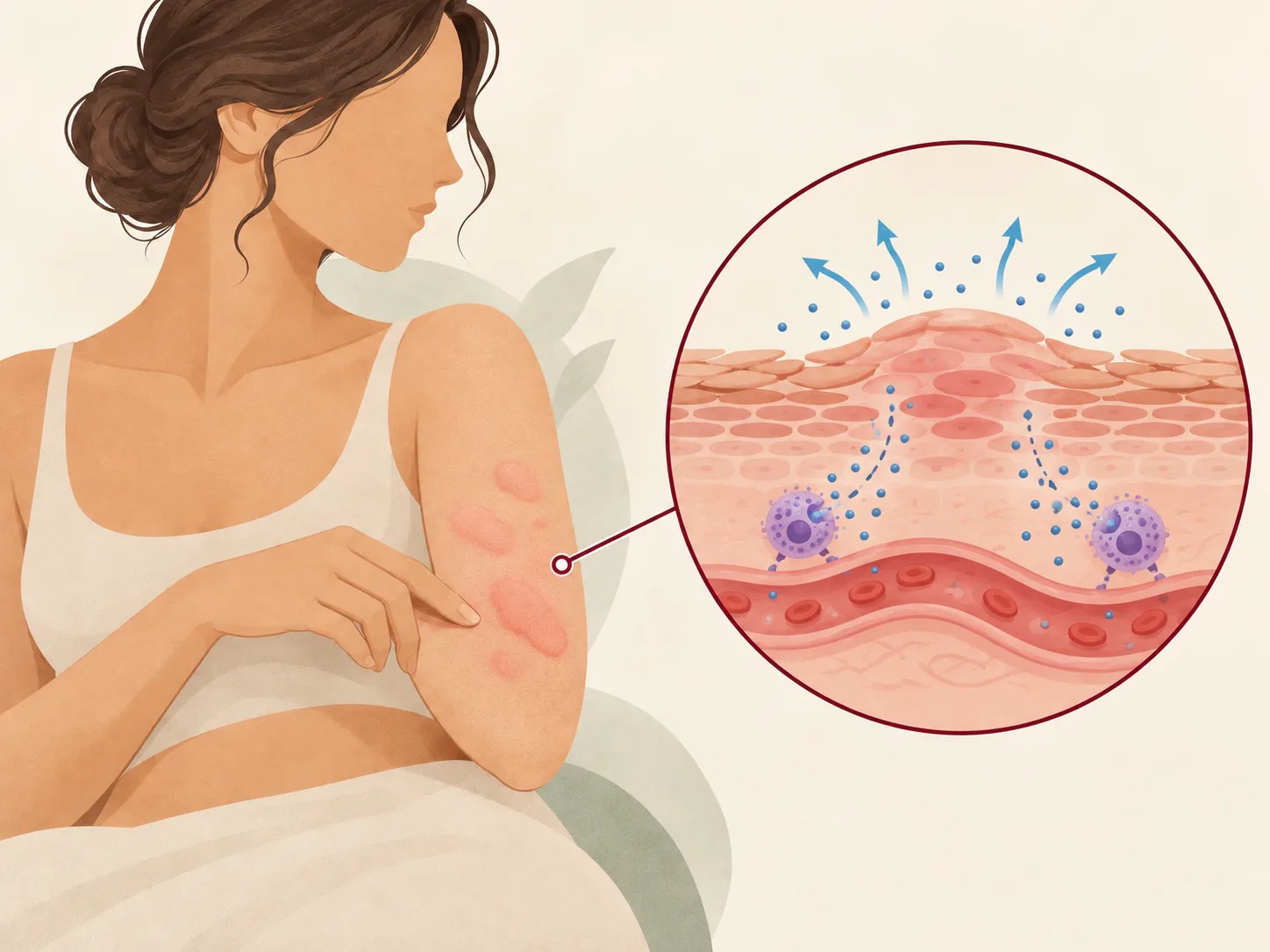
A typical urticaria wheal fades within 24 hours while new ones may appear elsewhere. Assessment considers duration, angioedema, medication, and warning signs rather than automatically ordering broad allergy panels.
Urticaria
Acute and chronic urticaria are not the same
Urticaria produces raised itchy pale or red wheals that change place and shape. Deeper swelling of lips, eyelids, hands, or feet is angioedema. Acute urticaria lasts up to six weeks and may relate to infection, medicine, food, or another temporary factor.
Chronic urticaria continues beyond six weeks and is often not caused by one external allergen. It may be autoimmune or induced by pressure, cold, heat, or exercise. Broad untargeted testing without a clinical clue often fails to identify a cause.
Common signs
- Itchy raised wheals that change shape
- Each wheal fades within 24 hours
- New lesions appear elsewhere
- Deeper swelling of lips or eyelids
When to see a dermatologist
When to see a dermatologist
- The rash recurs beyond six weeks
- An individual lesion lasts over a day, hurts, or leaves bruising
- There is angioedema or suspected medicine reaction
- Symptoms disrupt sleep or work or do not respond to treatment
Accurate diagnosis
How assessment works
Diagnosis rests on lesion behaviour and timing; photographs help when the rash is absent during the visit. The clinician reviews infection, medicines, physical triggers, and systemic symptoms. Tests are targeted. A persistent painful lesion leaving bruising may require biopsy to exclude vasculitis.
An individual plan
Treatment approach
The goal is complete control of itch and wheals using the safest effective approach while avoiding unjustified restrictions and prolonged steroid use.
Non-sedating antihistamines
A second-generation antihistamine is foundational; dose and course are adjusted by the clinician to guidance and health.
Trigger review
New medicines and reproducible physical factors are reviewed, without broad diets lacking a credible link.
Stepwise escalation
Persistent chronic urticaria may need guideline-based escalation and monitoring by a dermatologist.
Your RDG care path
How the clinic can help
Services are selected after dermatologist assessment and according to the individual findings, not from a name or photograph alone.
Long-term control
What to expect
Chronic urticaria varies, but settles over time for many people. Sudden tongue or throat swelling, breathing difficulty, dizziness, or fainting may indicate anaphylaxis and requires emergency care rather than waiting for a planned dermatology visit.
This information does not replace medical consultation. Seek urgent medical care for sudden, severe, or rapidly progressive symptoms.
Dermatologists


Frequently asked questions
Is urticaria always an allergy?
No. Chronic spontaneous urticaria in particular is often not linked to a single food or environmental allergen.
Do I need a broad allergy panel?
Only when history suggests a specific reproducible link; untargeted panels can produce misleading results.
Is it contagious?
No. Urticaria itself cannot be passed to another person through touch.
Medical sources
Content updated: 13 October 2026
Treatment starts with an accurate diagnosis
After assessment, the dermatologist will explain the appropriate plan and costs. There is no single fixed treatment price because it depends on the diagnosis and therapy required.