Skin health guide · RDG Clinic
Contact dermatitis assessment in Riga
The goal is not only to calm the rash but to identify a possible cause. Its location, work, hobbies, and every product touching the skin provide important clues.
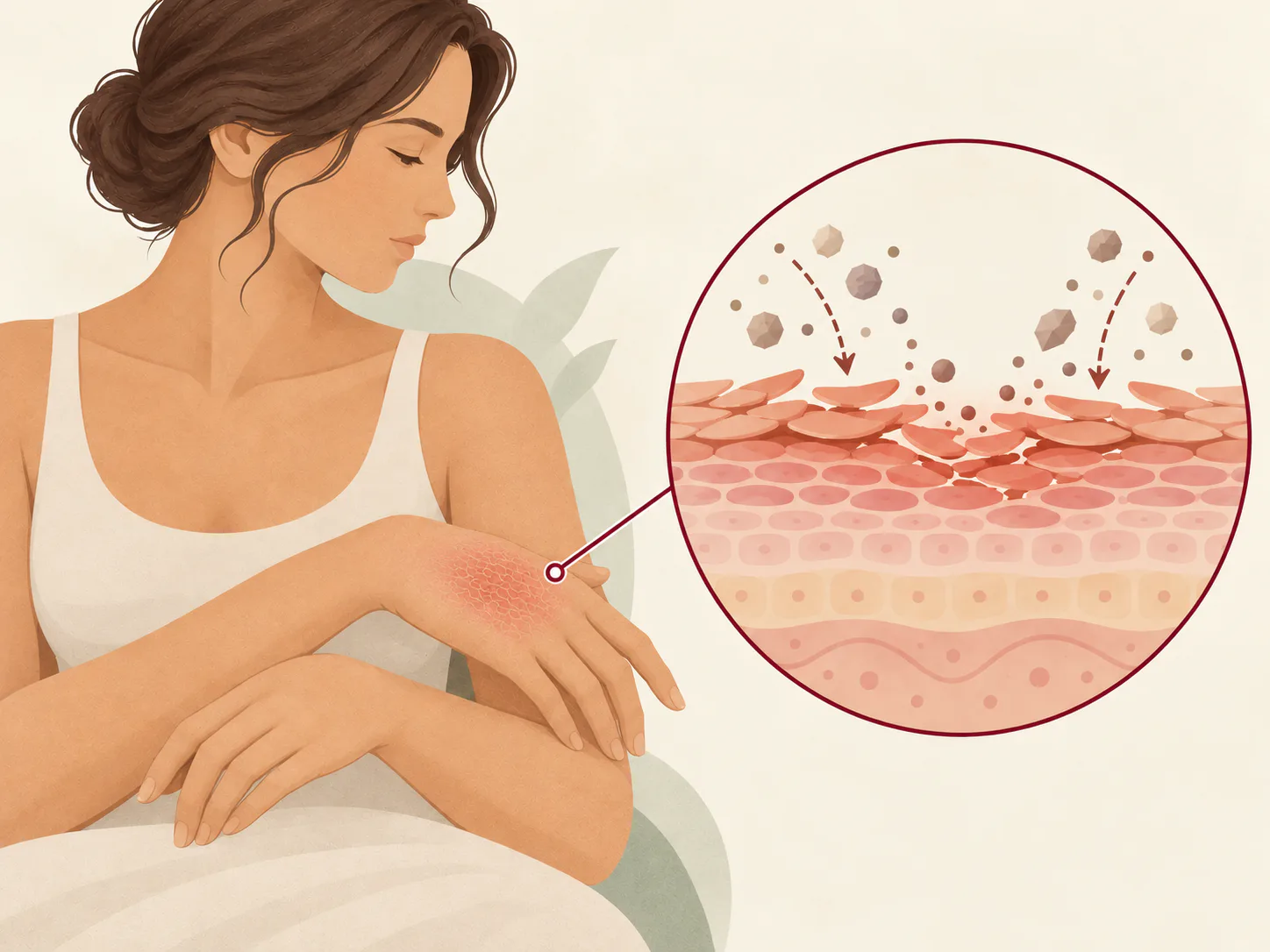
Contact dermatitis
Irritant and allergic reactions are not the same
Irritant contact dermatitis develops when water, detergents, solvents, friction, or other exposures damage the skin barrier. Allergic contact dermatitis is an immune reaction to a specific substance such as metal, fragrance, preservative, hair dye, or adhesive. Allergy can arise even to a product used uneventfully for years.
The rash often begins at the contact site but can spread. Atopic dermatitis, fungal infection, psoriasis, and other conditions may look similar, so changing products at random does not always identify the cause.
Common signs
- An itchy, red, or swollen rash at a contact site
- Dry, cracked, or painful skin
- Blisters, weeping, or crusting during an acute flare
- Recurring rash at work or after a particular product
When to see a dermatologist
When to see a dermatologist
- The rash recurs or its cause is unclear
- Hands, face, or eyelids are affected, or occupational exposure is difficult to avoid
- The rash is extensive, very painful, weeping, or appears infected
- Treatment has not helped or several products are suspected
Accurate diagnosis
How assessment works
The dermatologist reviews timing, work, hobbies, gloves, cosmetics, hair and nail products, medication, and home exposures. Pattern and location help distinguish irritation from allergy and other diseases. Suspected delayed contact allergy may lead to patch testing, which is different from prick testing for immediate allergy.
An individual plan
Treatment approach
The most effective long-term step is reducing or avoiding the confirmed trigger while restoring the skin barrier and treating inflammation.
Identifying and avoiding the cause
The clinician turns findings into a practical plan covering ingredient names, workplace protection, and safer alternatives.
Barrier repair
Gentle washing, frequent fragrance-free emollient, and appropriate gloves reduce repeated irritation.
Anti-inflammatory treatment
A topical steroid or steroid-sparing medicine is selected by site, severity, and age, with clear instructions on duration.
Care for difficult disease
Widespread or chronic dermatitis may require phototherapy or systemic treatment after individual risk assessment.
Your RDG care path
How the clinic can help
Services are selected after dermatologist assessment and according to the individual findings, not from a name or photograph alone.
Long-term control
What to expect
Skin may need several weeks to recover after the trigger is removed. Allergy usually persists, so knowing ingredient synonyms and cross-sources matters. Rapid swelling, breathing difficulty, or a severe general reaction requires urgent care.
This information does not replace medical consultation. Seek urgent medical care for sudden, severe, or rapidly progressive symptoms.
Dermatologists


Frequently asked questions
Is patch testing a blood test?
No. Small amounts of allergens are applied to the back under patches and reactions are read at scheduled times over several days.
Is a “hypoallergenic” product safe?
Not necessarily. The label does not guarantee absence of your particular allergen; the full ingredient list must be checked.
Can contact allergy begin suddenly?
Yes. Sensitisation can develop after repeated exposure, even when a product was used for years without visible reaction.
Medical sources
Content updated: 13 October 2026
Treatment starts with an accurate diagnosis
After assessment, the dermatologist will explain the appropriate plan and costs. There is no single fixed treatment price because it depends on the diagnosis and therapy required.