Skin health guide · RDG Clinic
Fungal skin infection assessment in Riga
A ring-shaped or scaly rash is not always fungal. A dermatologist assesses its appearance, site, and risk factors and confirms infection with sampling when needed before treatment.
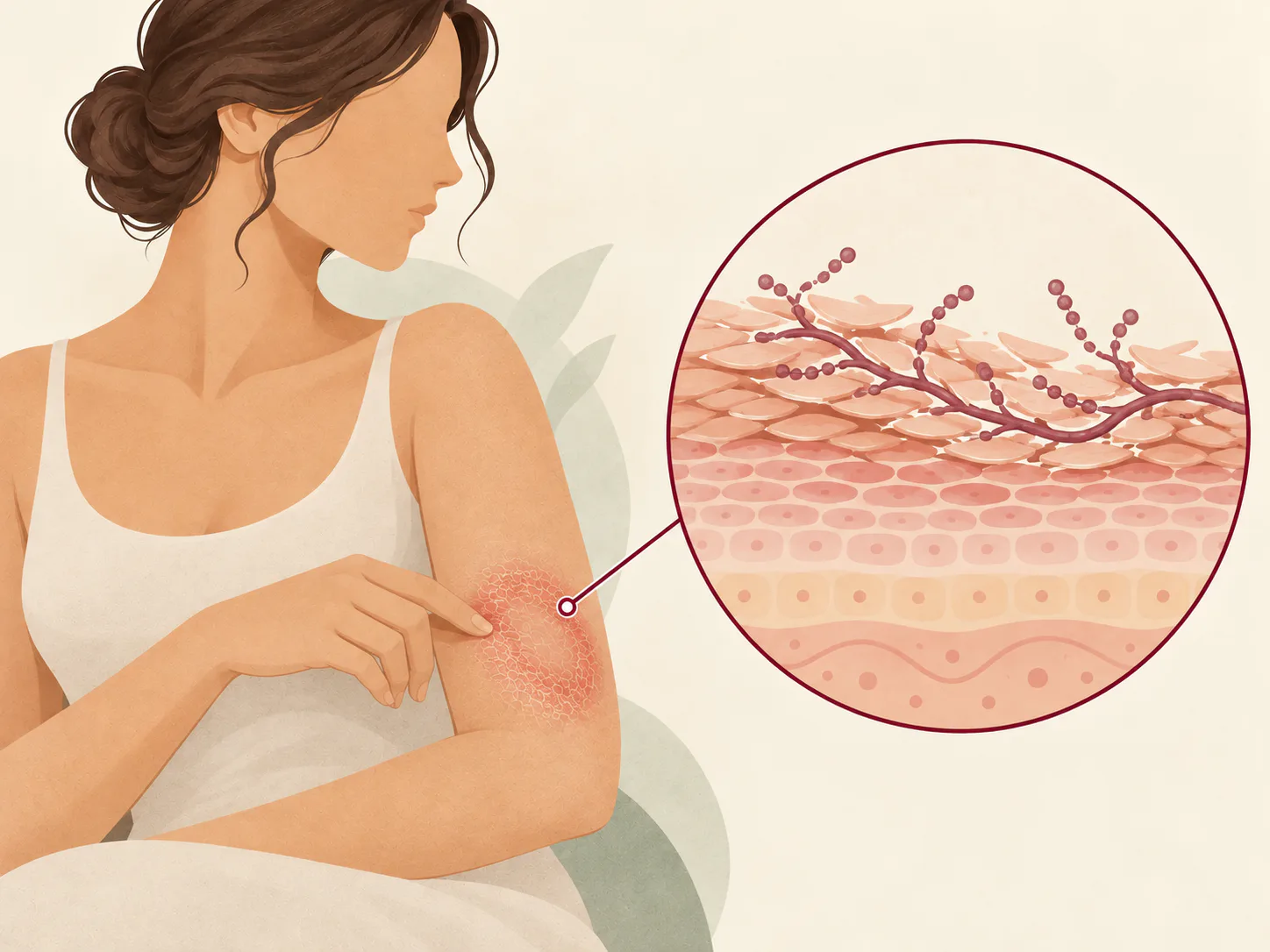
Fungal skin infections
Different fungi affect different skin sites
Dermatophytes can affect body skin, feet, groin, scalp, and nails. A scaly edge, itch, and gradual spread are common. Candida more often proliferates in moist folds, while Malassezia can cause pityriasis versicolor with lighter or darker patches.
Eczema, psoriasis, bacterial infection, and other conditions can appear similar. A steroid cream may suppress redness but alter and spread an unrecognised dermatophyte infection. Persistent or atypical rash therefore needs diagnosis.
Common signs
- A ring-shaped patch with a scaly edge
- Itch, cracks, or peeling between toes
- A moist red rash in a skin fold
- Patches gradually enlarge or spread
When to see a dermatologist
When to see a dermatologist
- The diagnosis is unclear or the rash is not improving
- Scalp, face, or a large area is affected, or hair is lost
- There is pain, pus, fever, or rapid worsening
- You have diabetes, immunosuppression, pregnancy, or recurrent infection
Accurate diagnosis
How assessment works
The dermatologist examines the rash and asks about sport, animals, shared facilities, medication, and previous treatment. Skin scraping microscopy, culture, or another laboratory method may confirm diagnosis, especially before longer systemic therapy or when the presentation is uncertain.
An individual plan
Treatment approach
Treatment depends on fungal type, site, extent, and health. An inadequate course encourages recurrence, while unnecessary therapy delays the correct diagnosis.
Topical antifungal treatment
A limited confirmed infection may use a cream, gel, or solution with a defined duration and treatment area.
Systemic treatment
Scalp, widespread, deeper, or resistant infection may need tablets after interaction and safety review.
Reducing spread
Keep skin dry, avoid sharing towels or footwear, wash textiles, and assess household contacts or pets when appropriate.
Your RDG care path
How the clinic can help
Services are selected after dermatologist assessment and according to the individual findings, not from a name or photograph alone.
Doctor consultation
In person or online: a professional assessment of your health and skin with a clear plan for next steps.
About this service →Laboratory sample collection
Collection of prescribed laboratory samples at the clinic, with clear preparation and subsequent result review.
About this service →Skin biopsy and histology
A small tissue sample to clarify diagnosis, using the most suitable biopsy method with or without a stitch.
About this service →Long-term control
What to expect
Symptoms may improve before infection is eradicated, so the prescribed course should be completed. Colour change after pityriasis versicolor can persist after the fungus clears. Continued spread should prompt diagnostic review rather than repeated random treatment.
This information does not replace medical consultation. Seek urgent medical care for sudden, severe, or rapidly progressive symptoms.
Dermatologists


Frequently asked questions
Is a fungal infection contagious?
Dermatophytes can spread from people, animals, or shared surfaces; transmissibility depends on the specific type.
Can I use a steroid cream?
Not without diagnosis, because it can alter the appearance of fungal infection and encourage spread.
Is a test always needed?
No. A typical limited infection may be clinical, but testing is valuable for atypical, recurrent, or systemically treated disease.
Medical sources
Content updated: 13 October 2026
Treatment starts with an accurate diagnosis
After assessment, the dermatologist will explain the appropriate plan and costs. There is no single fixed treatment price because it depends on the diagnosis and therapy required.