Skin health guide · RDG Clinic
Nail fungus diagnosis and treatment in Riga
Not every yellow or thickened nail is fungal. Psoriasis, trauma, and other nail disease can look similar, so sampling and accurate diagnosis matter before oral treatment.
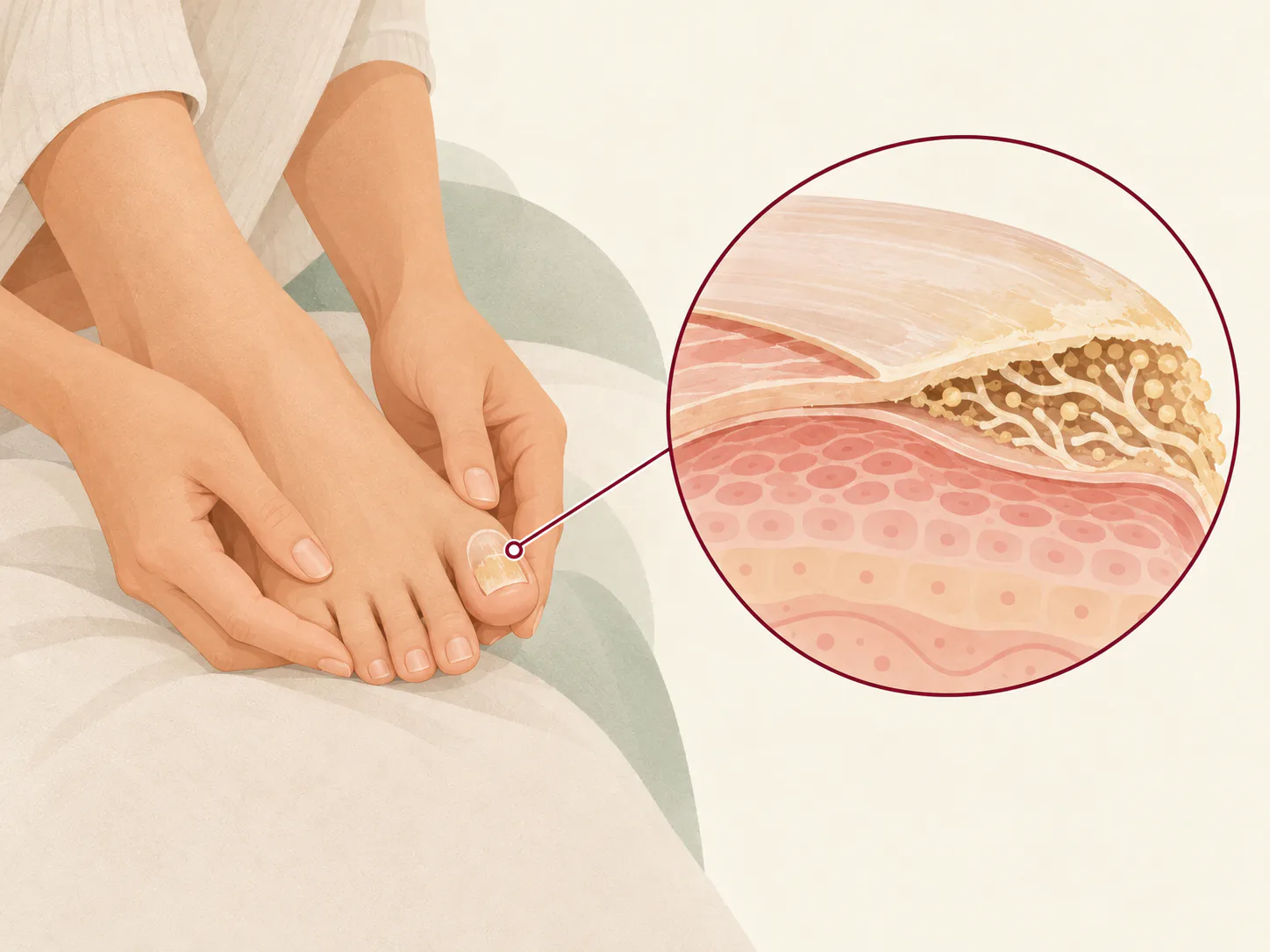
Nail fungus
Nail recovery takes time
Onychomycosis is fungal infection of the nail plate and subungual tissue. It often begins at the free edge with white or yellow colour, crumbling, and thickening. Athlete’s foot, footwear, moisture, nail trauma, age, diabetes, and circulation problems increase risk.
Nail psoriasis, repeated trauma, bacterial colonisation, and other dystrophies can appear similar. Treatment lasts months and systemic medicines carry risks, so diagnosis should ideally be confirmed from a correctly collected nail sample.
Common signs
- White or yellow change from the free nail edge
- Thickening and debris beneath the nail
- Separation of nail from its bed
- Concurrent scaling or cracks on the feet
When to see a dermatologist
When to see a dermatologist
- Diagnosis is unconfirmed or several nails are affected
- The nail hurts, is inflamed, or impairs walking
- You have diabetes, poor circulation, or immunosuppression
- A pharmacy treatment has failed after an adequate course
Accurate diagnosis
How assessment works
The dermatologist examines nails and foot skin, assesses the affected proportion, and considers other causes. Material from the active area may undergo microscopy, culture, or molecular testing. A negative result may be repeated when clinical suspicion remains.
An individual plan
Treatment approach
Method depends on organism, number of nails, matrix involvement, health, and drug interactions. A visibly healthy nail grows slowly even after infection is controlled.
Topical treatment
Limited disease may use lacquer or solution consistently for a prolonged period, sometimes with nail thinning.
Oral treatment
Oral treatment may be more effective for extensive infection, after reviewing liver health, medication, pregnancy, and interactions.
Foot and footwear care
Treat athlete’s foot concurrently, keep feet dry, change socks, disinfect tools, and do not share nail equipment.
Your RDG care path
How the clinic can help
Services are selected after dermatologist assessment and according to the individual findings, not from a name or photograph alone.
Doctor consultation
In person or online: a professional assessment of your health and skin with a clear plan for next steps.
About this service →Laboratory sample collection
Collection of prescribed laboratory samples at the clinic, with clear preparation and subsequent result review.
About this service →Long-term control
What to expect
A fingernail regrows over months and a toenail often over 12–18 months. Existing damage does not disappear immediately; success is judged by healthy nail growing from the base. Recurrence is possible, so athlete’s foot and moisture control matter.
This information does not replace medical consultation. Seek urgent medical care for sudden, severe, or rapidly progressive symptoms.
Dermatologists


Frequently asked questions
Do I need a test before tablets?
Usually yes, because another nail disease will not benefit from antifungal tablets but will still carry their risk.
Does laser cure nail fungus?
Evidence for complete cure is limited; laser does not replace diagnostic confirmation and appropriate therapy.
Is it contagious?
It can spread through shared tools, footwear, or damp surfaces, although individual susceptibility varies.
Medical sources
Content updated: 13 October 2026
Treatment starts with an accurate diagnosis
After assessment, the dermatologist will explain the appropriate plan and costs. There is no single fixed treatment price because it depends on the diagnosis and therapy required.