Skin health guide · RDG Clinic
Post-inflammatory pigmentation treatment in Riga
Post-inflammatory pigmentation is not a scar, but treatment begins by identifying ongoing inflammation and confirming the mark is pigment. Aggressive procedures can darken it.
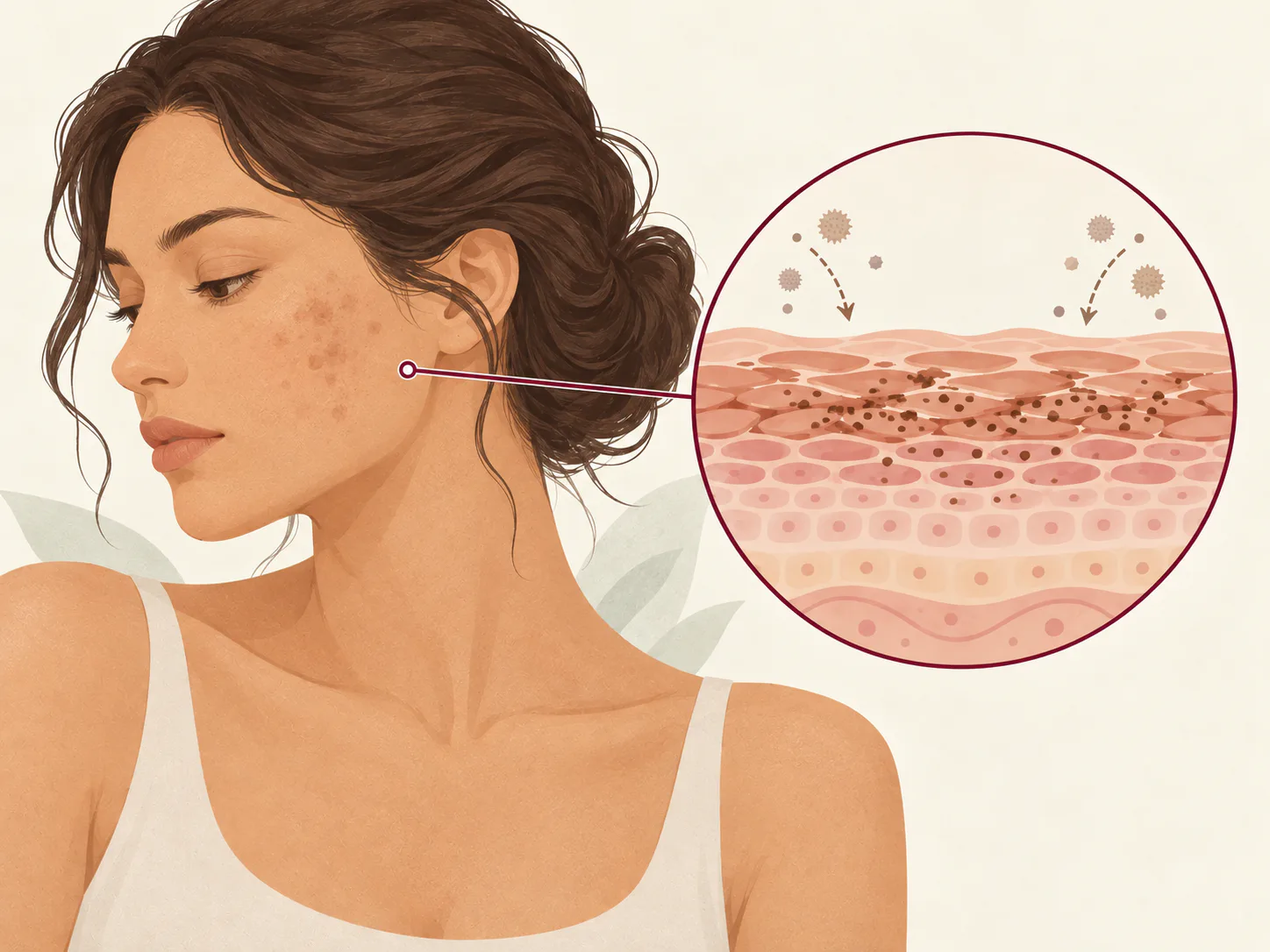
Post-inflammatory hyperpigmentation
Pigment remains after inflammation settles
Inflammation stimulates melanin production and transfer. Acne, dermatitis, bites, scratches, burns, or procedures can leave a flat brown or grey mark. It is more common and persistent in darker skin types, and ultraviolet and visible light intensify it.
Post-inflammatory redness, melasma, lentigines, and individual skin lesions may look similar. If acne or dermatitis remains active, new marks continue despite lightening treatment. The active disease is therefore controlled first and further irritation avoided.
Common signs
- A flat mark at a site of previous inflammation
- Brown, grey, or darker than surrounding skin
- No depression or elevation like a scar
- Becomes more visible after sun exposure
When to see a dermatologist
When to see a dermatologist
- The mark is new, one-sided, changing, or unrelated to inflammation
- Active disease continues or skin is very sensitive
- Non-prescription products cause irritation
- You want a procedure and need worsening risk assessed
Accurate diagnosis
How assessment works
The dermatologist reviews onset, preceding inflammation, surface, and pigment pattern, using dermoscopy when appropriate. Pigment is distinguished from scarring, vascular redness, melasma, and a suspicious lesion. An atypical mark may need biopsy rather than a cosmetic procedure.
An individual plan
Treatment approach
The safest plan combines inflammation control, daily light protection, and gradual pigment treatment that does not damage the skin barrier.
Control of the underlying condition
Acne, eczema, or other inflammation is treated to prevent new marks.
Light protection
Broad-spectrum SPF and physical protection reduce darkening; tinted SPF may help darker skin types.
Topicals and procedures
Pigment-reducing agents are introduced gradually; peels, laser, or light are reserved for selected cases.
Your RDG care path
How the clinic can help
Services are selected after dermatologist assessment and according to the individual findings, not from a name or photograph alone.
Doctor consultation
In person or online: a professional assessment of your health and skin with a clear plan for next steps.
About this service →IPL phototherapy
Light-based treatment for sun-related pigmentation, superficial vessels, and uneven skin tone after skin-type and risk assessment.
About this service →Fractional CO₂ laser
An ablative laser procedure to remodel acne scars, texture, fine lines, and selected stretch marks with planned recovery.
About this service →Long-term control
What to expect
Superficial marks may fade over months and deeper pigment takes longer. Irritation, picking, scrubs, and overly intense procedures can create new pigmentation. The goal is even, gradual progress and control of active disease rather than aggressive rapid bleaching.
This information does not replace medical consultation. Seek urgent medical care for sudden, severe, or rapidly progressive symptoms.
Dermatologists


Frequently asked questions
Is it a scar?
No. It is a flat colour change, while a scar also changes skin texture.
How quickly does it fade?
Often over several months, depending on depth, skin type, light exposure, and new inflammation.
Does laser always help?
No. An unsuitable device or settings can worsen pigment, so diagnosis comes first.
Medical sources
Content updated: 13 October 2026
Treatment starts with an accurate diagnosis
After assessment, the dermatologist will explain the appropriate plan and costs. There is no single fixed treatment price because it depends on the diagnosis and therapy required.