Skin health guide · RDG Clinic
Melasma diagnosis and treatment in Riga
Not every brown patch is melasma. Before lightening products or procedures, a dermatologist confirms the diagnosis, assesses triggers, and creates a cautious long-term plan.
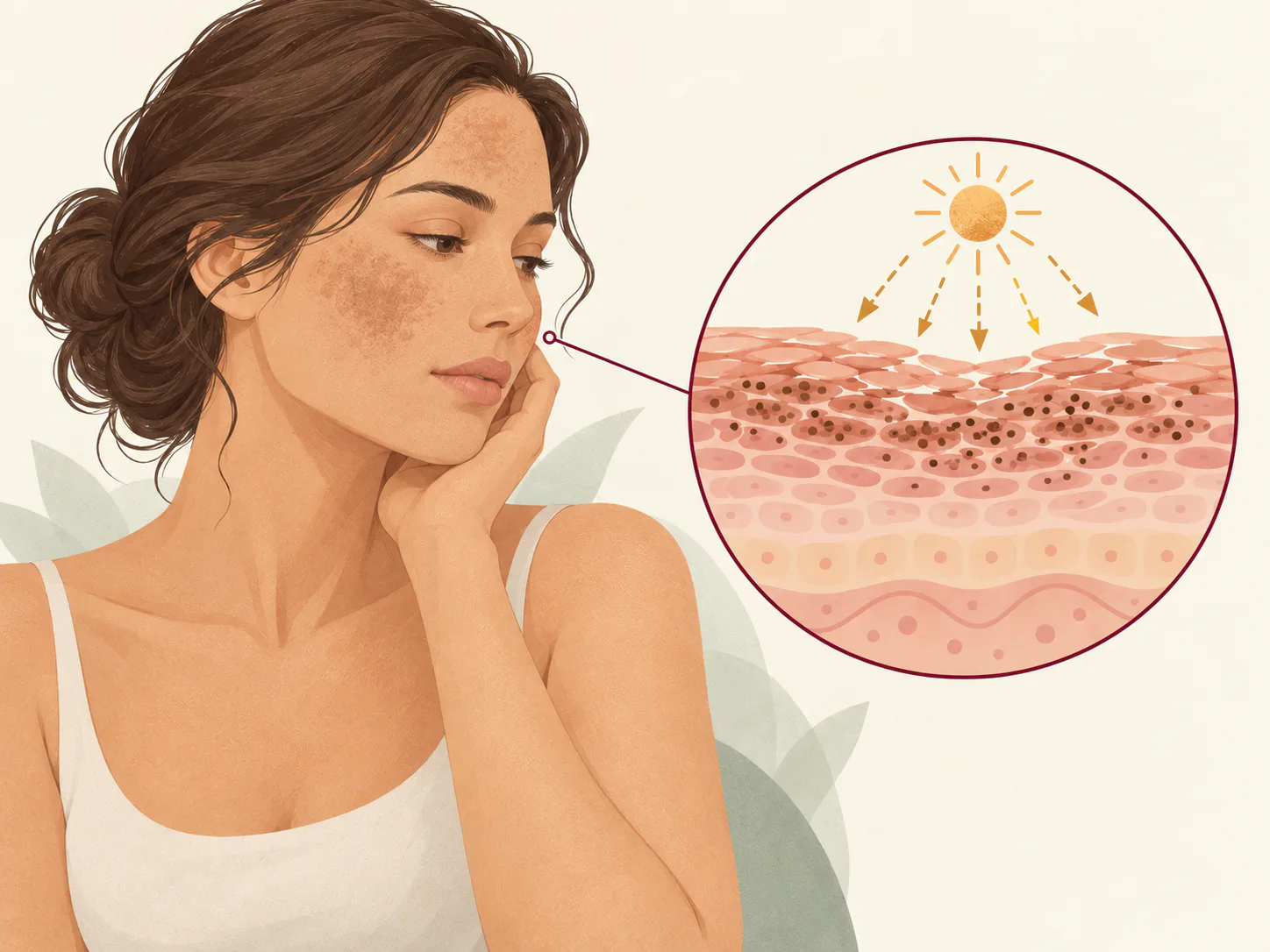
Melasma
Pigmentation influenced by light, hormones, and inflammation
Melasma most often appears on the cheeks, forehead, nose, upper lip, or jawline. It is more common in women and may begin during pregnancy or with hormonal medication, although several factors usually interact. Ultraviolet and visible light, heat, and irritation can sustain pigmentation.
Melasma is neither dangerous nor contagious, but it can be persistent and emotionally burdensome. Solar lentigines, post-inflammatory pigmentation, drug-related change, and some skin lesions can look similar, so treatment begins with an accurate diagnosis.
Common signs
- Symmetrical brown or grey-brown facial patches
- Patches darken after sun exposure or in summer
- The skin surface is usually smooth without scale
- Pigmentation returns after previous improvement
When to see a dermatologist
When to see a dermatologist
- Pigmentation is new, one-sided, changing, or uncertain
- Non-prescription products irritate the skin or make patches uneven
- Melasma began during pregnancy or hormonal medication use
- You are considering a procedure and need its flare risk assessed
Accurate diagnosis
How assessment works
The dermatologist examines pigment distribution and surface and reviews onset, sun exposure, pregnancy, hormones, medication, and products. Dermoscopy or a Wood lamp may help assess pigment character, interpreted alongside the clinical picture. An atypical case may require biopsy or other tests.
An individual plan
Treatment approach
Safe control usually combines consistent light protection, well-tolerated topical treatment, and only carefully selected procedures.
Light protection
Broad-spectrum SPF 30–50+, shade, and a hat are foundational; a tinted product with iron oxides can add visible-light protection.
Topical treatment
The clinician selects a pigment-reducing agent or combination, considering sensitivity, pregnancy, and previous irritation.
Trigger and barrier management
Reducing irritating products, unnecessary heat, and uncontrolled peels helps avoid additional inflammation and pigmentation.
Selected procedures
Peels, microneedling, lasers, or light may help selected patients but can also worsen melasma, so they are added only to a reasoned plan.
Your RDG care path
How the clinic can help
Services are selected after dermatologist assessment and according to the individual findings, not from a name or photograph alone.
Long-term control
What to expect
Improvement is usually assessed over several months, and pigment can recur after a good response. Overly aggressive treatment may cause irritation or post-inflammatory pigmentation, so the goal is gradual, sustainable progress rather than instant “bleaching”.
This information does not replace medical consultation. Seek urgent medical care for sudden, severe, or rapidly progressive symptoms.
Dermatologists


Frequently asked questions
Is melasma dangerous?
Melasma itself is benign, but a new, changing, or atypical patch should be examined to confirm the diagnosis.
Is sunscreen enough?
Light protection is essential, but visible melasma often also needs individually selected topical treatment.
Is laser the fastest solution?
Not always. An unsuitable device or settings can worsen pigmentation; procedures are considered only after diagnosis and foundational care.
Medical sources
Content updated: 13 October 2026
Treatment starts with an accurate diagnosis
After assessment, the dermatologist will explain the appropriate plan and costs. There is no single fixed treatment price because it depends on the diagnosis and therapy required.