Skin health guide · RDG Clinic
Pityriasis rosea: diagnosis and treatment in Riga
A self-limiting oval scaly body rash, often following one larger herald patch. An RDG dermatologist assesses the cause, severity, and the most appropriate next step.
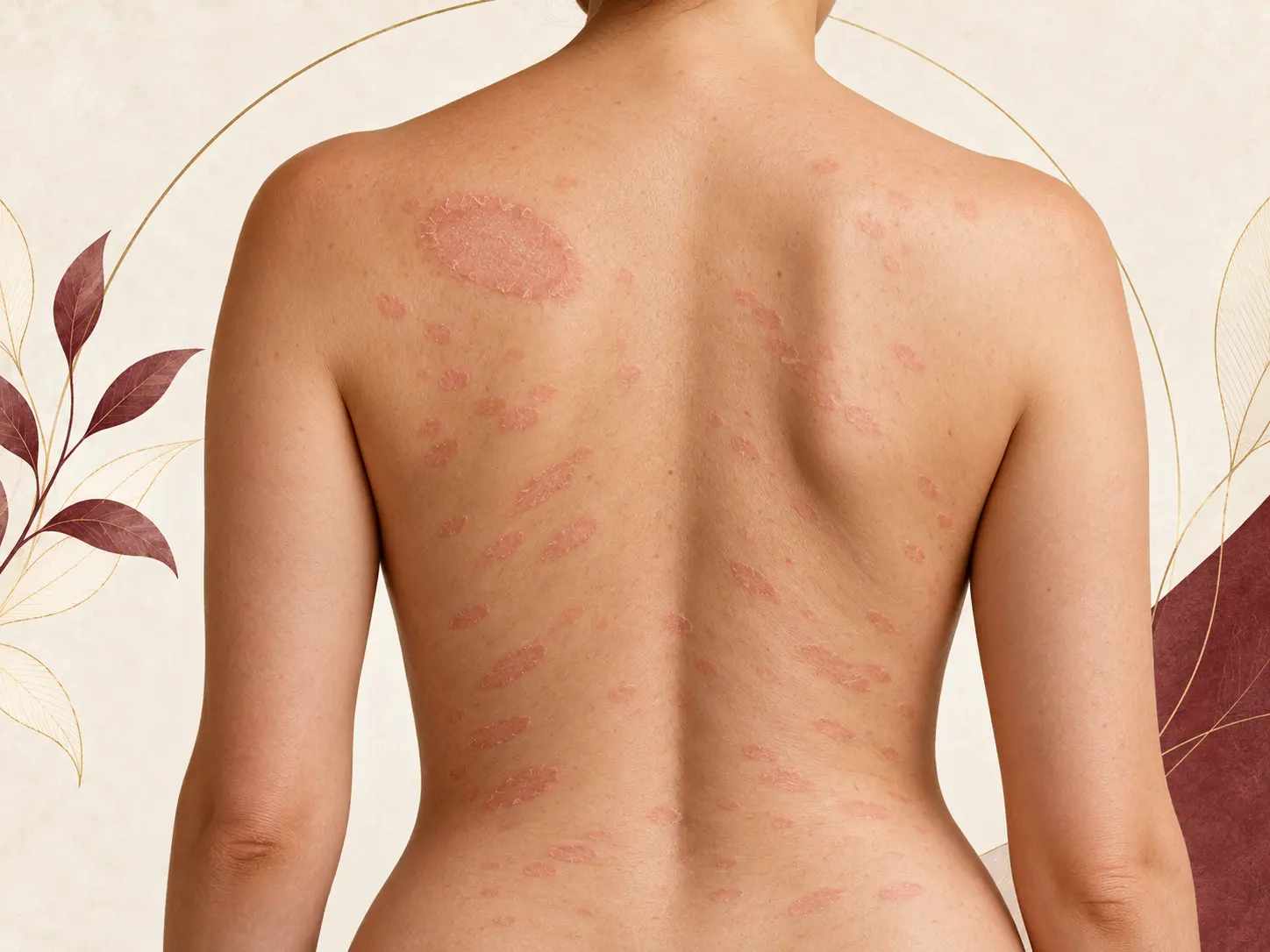
Pityriasis rosea
What this condition means
After a herald patch, smaller oval lesions may appear along skin lines over days or weeks. It usually resolves spontaneously, but pregnancy and atypical cases warrant medical review.
Several different disorders can look similar, so a photograph alone cannot establish a reliable diagnosis. The consultation considers how the changes evolved, associated symptoms, and products or medicines already tried.
Common signs
- One larger herald patch
- Smaller oval scaly lesions
- Christmas-tree pattern on the back
- Mild to moderate itch
When to see a dermatologist
When to see a dermatologist
- Rash during pregnancy
- Palms, soles, or mucosa are involved
- There is fever or systemic illness
- The rash lasts beyond three months
Accurate diagnosis
How assessment works
The dermatologist reviews onset, course, symptoms, previous treatment, medicines, and relevant health factors. Examination covers affected skin, hair, or nails and dermoscopy where useful. Blood tests, scraping, culture, patch testing, or biopsy are chosen only when the result may change diagnosis or management.
An individual plan
Treatment approach
The plan is tailored to diagnosis, severity, site, age, comorbidity, and patient goals. It explains what to use, for how long, how benefit will be assessed, and when to seek earlier review.
Diagnosis-directed treatment
Reassurance, gentle care, and itch relief are often sufficient; antibiotics or antifungals are not needed unless another diagnosis is present. The clinician checks contraindications and explains safe use.
Barrier and daily care
Gentle cleansing, fragrance-free care, protection from sun or irritants, and avoiding scratching reduce secondary damage. Advice is adapted to the site and diagnosis.
Review and plan adjustment
At review, symptoms and objective change, adherence, and adverse effects are compared. If response is insufficient, the diagnosis is reconsidered and treatment adjusted stepwise.
Your RDG care path
How the clinic can help
Services are selected after dermatologist assessment and according to the individual findings, not from a name or photograph alone.
Long-term control
What to expect
Skin and hair disorders often improve gradually, so correct use and an agreed review point matter. Rapid deterioration, fever, severe pain, eye symptoms, or widespread blistering requires urgent medical care. The illustration is educational and cannot establish a diagnosis.
This information does not replace medical consultation. Seek urgent medical care for sudden, severe, or rapidly progressive symptoms.
Dermatologists


Frequently asked questions
Can this be diagnosed from a photograph?
A photograph may help triage, but often misses texture, distribution, and other important signs. A safe plan usually requires clinical history and examination.
Is this condition contagious?
The condition itself is generally not contagious. Infection can sometimes look similar, so an uncertain or rapidly spreading rash should be examined.
How quickly should improvement occur?
This depends on diagnosis, duration, and treatment. The clinician sets a realistic review interval; treatment should not be changed too early or continued indefinitely without assessing response.
Medical sources
Content updated: 13 October 2026
Treatment starts with an accurate diagnosis
After assessment, the dermatologist will explain the appropriate plan and costs. There is no single fixed treatment price because it depends on the diagnosis and therapy required.