Skin health guide · RDG Clinic
Hair-loss assessment in Riga
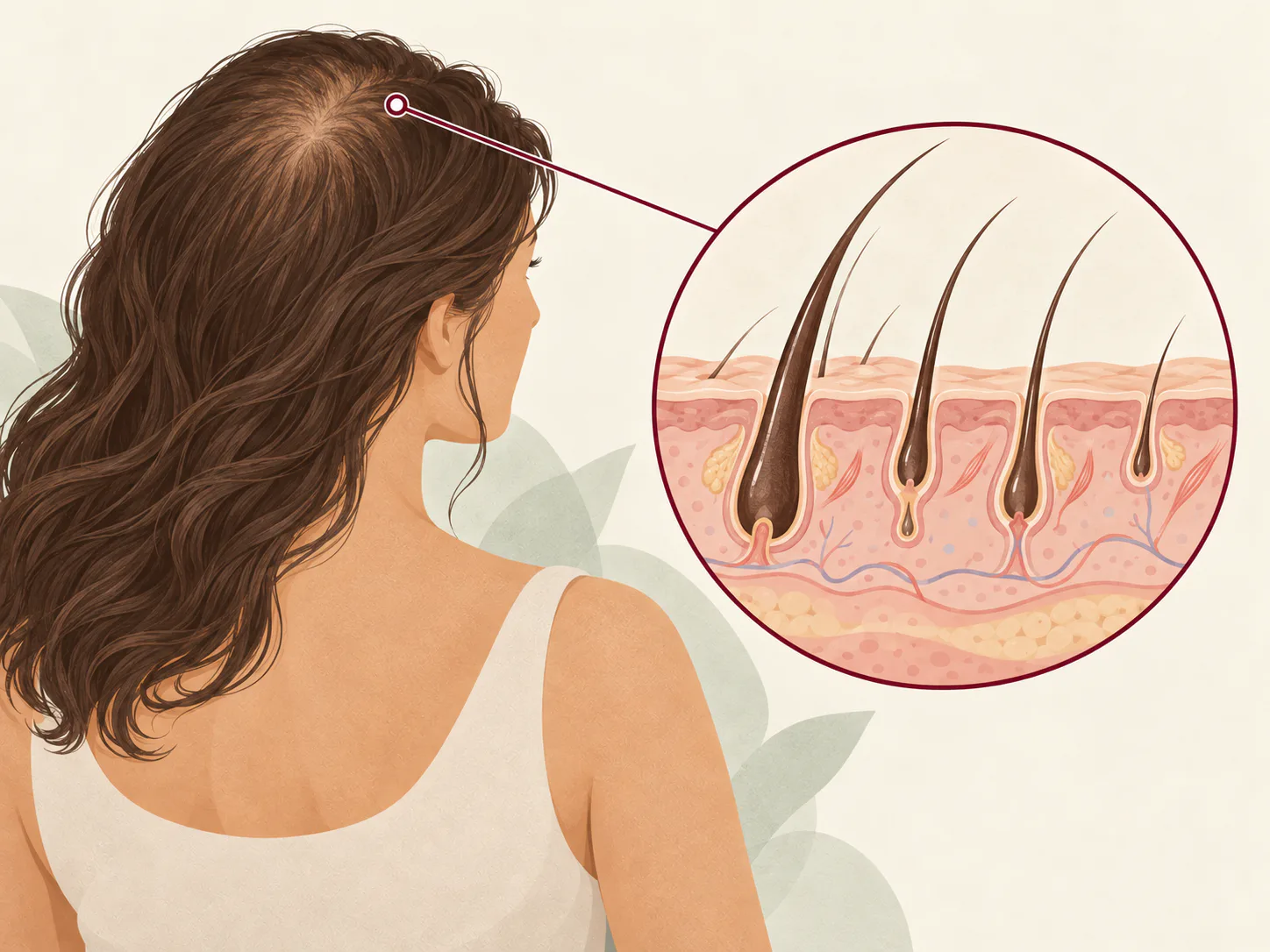
Hair loss is not a single diagnosis. A dermatologist assesses its pattern, the scalp, health history, and possible contributing factors before recommending treatment.
Hair loss
The cause should be identified before treatment
Hair grows in cycles, so increased shedding may appear several months after illness, surgery, childbirth, weight change, or major stress. Other common causes include hereditary thinning, autoimmune alopecia, inflammatory scalp disease, medication, or nutritional deficiency.
More than one cause may be present. Early assessment matters especially when loss is patchy, rapid, painful, or associated with scarring because some alopecias can permanently damage follicles.
Common signs
- More hair in the shower, brush, or on the pillow
- A gradually widening part or thinning crown
- Round or irregular bald patches
- Itch, redness, scale, pain, or broken hairs
When to see a dermatologist
When to see a dermatologist
- Loss is sudden, rapid, or patchy
- The scalp is painful, inflamed, crusted, or appears scarred
- Thinning is progressing or affects eyebrows and other areas
- The cause is unclear or self-treatment has not helped
Accurate diagnosis
How assessment works
The dermatologist reviews onset and pace, family history, illness, diet, medication, and hair practices. Scalp, hair, and nails are examined; trichoscopy and a hair-pull test may be used. Blood tests are targeted to the findings rather than ordered routinely for everyone. Uncertain or potentially scarring alopecia may require biopsy.
An individual plan
Treatment approach
Treatment depends on the diagnosis. The aim may be to remove a trigger, reduce inflammation, slow loss, or support regrowth; no single procedure suits everyone.
Addressing the cause
When illness, deficiency, medication, nutrition, or hair practices contribute, care focuses on the underlying factor and safe changes.
Medical treatment
Topical, injected, or systemic medication is selected by alopecia type, health information, pregnancy plans, and potential risks.
Scalp inflammation control
Scaling, infection, or inflammation is treated according to diagnosis because scalp health forms part of the overall plan.
Adjunctive procedures
PRP or injection therapy is considered only in selected situations as an adjunct, not a substitute for diagnosis or evidence-based foundational care.
Your RDG care path
How the clinic can help
Services are selected after dermatologist assessment and according to the individual findings, not from a name or photograph alone.
Doctor consultation
In person or online: a professional assessment of your health and skin with a clear plan for next steps.
About this service →Laboratory sample collection
Collection of prescribed laboratory samples at the clinic, with clear preparation and subsequent result review.
About this service →Skin biopsy and histology
A small tissue sample to clarify diagnosis, using the most suitable biopsy method with or without a stitch.
About this service →Scalp mesotherapy
Scalp microinjections only after assessing the cause of hair loss and the indication for a specific product.
About this service →PRP therapy
Autologous platelet-rich plasma prepared from the patient’s own blood for an individual skin or hair treatment plan.
About this service →Long-term control
What to expect
The hair cycle is slow: reduced shedding and regrowth are assessed over months using standardised photographs or trichoscopy. Not every follicle can regrow, and outcome depends on cause, duration, and adherence.
This information does not replace medical consultation. Seek urgent medical care for sudden, severe, or rapidly progressive symptoms.
Dermatologists


Frequently asked questions
Will I need blood tests?
Not always. Tests are chosen from the pattern of loss, symptoms, diet, health history, and examination findings.
Do supplements help everyone?
No. Supplements help when a specific deficiency exists; excess doses of some nutrients can be unnecessary or even worsen shedding.
When are results visible?
Usually not for several months. Some temporary forms regrow spontaneously, while chronic conditions may need long-term control.
Medical sources
Content updated: 13 October 2026
Treatment starts with an accurate diagnosis
After assessment, the dermatologist will explain the appropriate plan and costs. There is no single fixed treatment price because it depends on the diagnosis and therapy required.